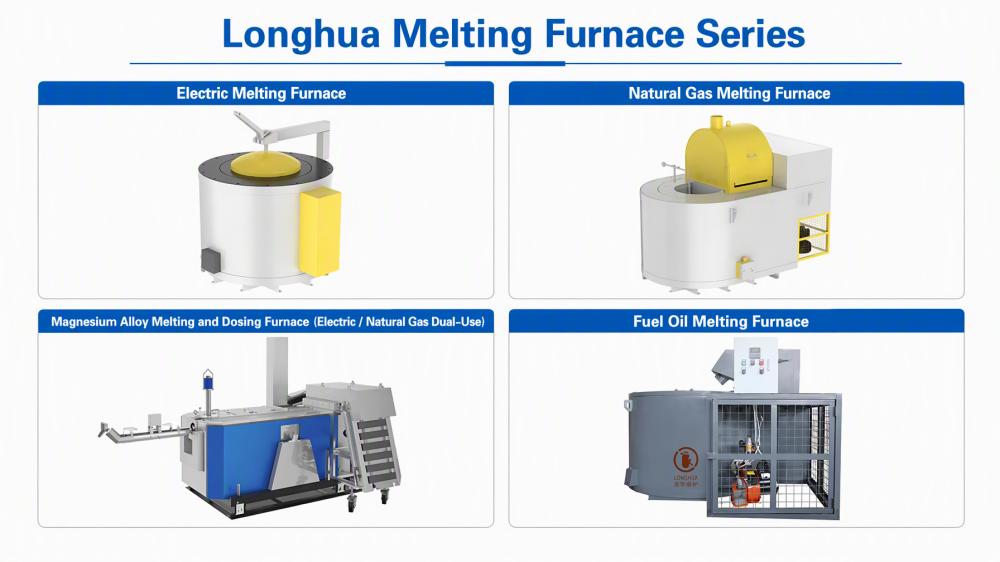



Electric melting furnaces and natural gas melting furnaces are two mainstream metal melting devices for die casting workshops. The selection between them depends on your factory layout, energy cost, production scale, site conditions and overall production line planning. Proper furnace type choice directly affects workshop space arrangement, supporting system configuration and long-term operational expenses when building or upgrading your die casting plant.
Electric Melting Furnace: Layout & System Configuration
Electric melting furnaces use resistance or induction heating. They have compact body size and lower heat radiation, so they require less isolation space in the workshop.
For layout planning, electric furnaces can be placed closer to die casting machines, shortening the transfer distance of molten aluminum. The main supporting system is a stable high-capacity power supply, plus power distribution cabinets, cooling water circulation systems and fume extraction units. No gas pipeline network is needed on-site.
This furnace type fits mid & small-scale die casting workshops, factories with limited site space, or regions with low electricity prices. It delivers stable melting temperature control and low noise.
Natural Gas Melting Furnace: Layout & System Configuration
Natural gas melting furnaces rely on combustion heating with larger overall dimensions and strong surface heat radiation. More safety clearance must be reserved around the furnace zone during workshop layout design.
The supporting system requires certified natural gas pipeline layout, gas leakage alarm devices, ventilation and heavy-duty flue gas treatment systems. You need to separate the melting area as an independent fire protection zone.
This solution works best for large-volume continuous die casting production. It gains advantages where natural gas price is cheap, and can support long uninterrupted melting tasks for mass production lines.
Key Points for Production Line & Factory Planning
When planning your new die casting factory, match furnace selection with your whole production workflow.
- Molten metal transportation route: Minimize the distance between melting furnace and die casting machines to reduce temperature loss of molten alloy.
- Safety zoning: Gas furnaces need independent hazardous zones; electric furnaces have simpler fire separation requirements.
- Auxiliary infrastructure budget: Calculate upfront investment for power capacity or gas pipeline construction before civil works and floor modification.
- Emission compliance: Both furnace types need fume cleaning systems. Gas furnaces generate more combustion exhaust and require stricter gas treatment.
FAQs
Q1: Which furnace is easier for factory layout modification?
A: Electric melting furnaces. They need no gas piping and demand smaller safety clearance.
Q2: What is the main energy cost difference?
A: It depends on local utility prices. Gas furnaces often cost less for high-volume continuous melting.
Q3: Can both furnaces connect with automated die casting lines?
A: Yes. Both can be integrated with automatic molten metal feeding systems.
Q4: Which furnace offers better temperature stability?
A: Induction electric melting furnaces provide more precise and consistent molten metal temperature control.