Request a Quote
Language : English

English

  • Strategies for improving die casting quality
    2020-04-24

    Strategies for improving die casting quality

    Precise low-speed injection control is the core key to eliminating casting defects and stabilizing product quality in die casting production. Unreasonable velocity settings for die casting machine low-speed stage easily cause air entrapment, turbulence, cold shuts and poor forming, seriously restricting the yield and precision of aluminum alloy castings for traditional die casting equipment. In actual production, excessive low-speed injection velocity drives massive air into the mold cavity and causes aluminum liquid surging in the pressure chamber, increasing liquid air content and triggering pores and sand holes. Conversely, overly low speed leads to cold insulation defects and incomplete filling. The optimal low-speed range is strictly controlled at 0.1-0.5 m/s, adopting uniform or uniformly accelerated injection to push molten metal gently. This stable flow avoids turbulence and gas dissolution, facilitates smooth cavity exhaust, and fundamentally reduces casting defects. Traditional low-speed calculation formulas have obvious deviations from actual filling effects. Manufacturers mainly rely on manual experience and repeated debugging to set parameters, resulting in unstable die casting machinery process, massive trial-production waste and prolonged R&D cycles. To solve this industry pain point, Bengbu Longhua Die Casting Machine Co., Ltd., with 38 years of manufacturing experience, cooperates with the Hefei Institutes of Physical Science, CAS to develop upgraded production technology. Longhua’s optimized intelligent process perfectly solves common defects such as pores and sand holes. It standardizes low-speed injection parameters, stabilizes continuous production quality of die casting machine, greatly improves casting precision and yield, and provides reliable, high-efficiency molding solutions for global aluminum die-casting manufacturers.
    Read More
  • Basic structure and working principle of natural gas compressor
    March 27,2020.

    Basic structure and working principle of natural gas compressor

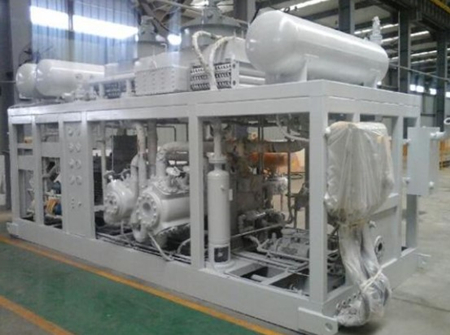
      Today, Longhua Technology will share with you the basic structure and working principle of natural gas compressors. 1.Basic structure  Natural gas compressors are reciprocating piston compressors, which are mainly composed of three parts: moving mechanism (crankshaft, bearing, connecting rod, crosshead, pulley or coupling, etc.), working mechanism (cylinder, piston, valve, etc.) and Body. There are also three auxiliary systems, namely the lubrication system, the cooling system and Regulation system.   Movement mechanism: including crankshaft, connecting rod, crosshead, piston rod, etc. The motion mechanism is a crank-link mechanism that changes the rotational movement of the crankshaft into a reciprocating motion of the crosshead. Usually, the driving machine drives the crankshaft to rotate through a coupling or a flywheel (belt pulley). The crankshaft is connected to the large end of the connecting rod, and the small end of the connecting rod is connected to the crosshead. The crosshead is limited to the body slide and can only perform reciprocating motion.   Working mechanism: Including cylinder, piston, air valve, etc. The working mechanism is the main component to realize the working principle of the compressor. The cylinder is generally in the shape of a barrel, and there are several inlet and exhaust valves at both ends. The body is used to support and install the entire movement mechanism and working mechanism, and it is also used as a lubricating oil tank. The crankshaft is supported on the body by a bearing. The slide on the body supports the crosshead. The cylinders are fixed on the two arms of the body. . 2. Working principle   The reciprocating compressor uses a crank and linkage mechanism to change the rotary motion of the driver into the reciprocating motion of the piston. The cylinder and the piston together form a working chamber to achieve gas compression. The piston reciprocates in the cylinder to allow the gas to complete the air intake in the cylinder. , Compression, exhaust, etc. The intake and exhaust valves are used to control the gas entering and exiting the cylinder, and the pressure of the gas is increased during the compression process, thereby achieving the purpose of pressurizing the gas.
    Read More
  • Common sense about release agent
    March 25,2020.

    Common sense about release agent

    Release agent has been widely used in die casting production. It is an important part of mold cooling. It has important applications in the fields of metal die casting and vacuum foamed sheet, which can effectively extend the service life of the mold. Next, Longhua Die Casting Machine will introduce the concept, application characteristics and use of release agent. Overview of release agents 1. Definition and role of release agent Definition: Release agent is an interface coating used on the surfaces of two objects that are easy to adhere to each other. role: to form a layer of inert coating between the mold and the mold, so that the mold can be easily removed from the mold, improve the wear resistance and scratch resistance of the final product, it can make the surface of the object easily detached, Smooth and clean. 2. the principle of release agent Since the lubricant substance (release agent) is easy to adhere to the metal surface (mold surface), a static lubricant film layer is formed due to adsorption, thereby reducing the friction between the polymer (mold) and the processing equipment (mold) , Produces a significant film release effect and improve the surface finish of plastic parts. Classification of release agents 1. Classified by adding method / usage: internal release agent and external release agent. The former is directly added to the molding plastic; the latter is coated on the surface of the cavity of the mold. 2. Classified by chemical composition: inorganic, organic and polymer. (1) Inorganic release agent (2) Organic release agent (3) Polymer release agent 3. Classified by function / application: Metal demolding: die-cast aluminum (magnesium, zinc), casting, forging, etc .; and rubber, fiberglass, plastic, polyurethane, concrete. 4.classified by shape: powder, liquid and emulsion (can be atomized). 5. Classified by service life: conventional release agent, semi-permanent release agent. 6. Classification by form: solvent-based release agent, water-based release agent, solvent-free release agent, powder release agent, paste release agent Application of release agent Mold release agents are used in various molding operations such as concrete precast parts, products, glass fiber reinforced plastics, metal die casting, polyurethane foam and elastomers, injection molded thermoplastics, vacuum foamed sheets and extruded profiles. Advantages of release agent: 1. Demoldability (lubricity). When forming a uniform thin film and a complex shape, the dimensions are accurate. 2. Good mold release continuity. 3. The appearance of the formed object is smooth and beautiful, and does not cause dust adhesion due to the application of sticky release agent. 4. Superior secondary workability. When the release agent is transferred to the molded product, it has no adverse effect on processed products such as electroplating, hot stamping, printing, coating, and adhesion. 5. Easy coating. 6. heat resistance. 7. Pollution resistance. 8. Good forming and ...
    Read More

  • Operating requirements of aluminum alloy die casting machine
    2020-03-23

    Operating requirements of aluminum alloy die casting machine

    Bengbu Longhua Die Casting Machine Co., Ltd. has released standardized operation specifications for aluminum alloy die casting machine, providing professional and actionable guidance for enterprises to stabilize die casting quality, reduce casting defects and achieve standardized mass production. Scientific operation management is the core key to give full play to the performance of high-precision die casting equipment and improve the yield of aluminum alloy castings. Strict whole-process monitoring of the die casting process is the primary guarantee for stable product quality. The molten aluminum temperature in the holding furnace must be accurately controlled within ±3℃ to maintain stable stirring temperature. Operators need to adjust the temperature in real time according to the chemical composition of each furnace, stably controlling the solid phase rate at ±2%. Reasonable mold temperature control ensures smooth alloy filling and orderly solidification. Timely adjustment of die casting machine process parameters and regular product inspection effectively avoid defective castings and stabilize overall production quality. Standardized release agent spraying operation greatly reduces casting defects. Technicians implement differentiated spraying strategies, applying more release agent on difficult demolding areas and less on easy demolding positions. The top-down layered spraying mode discharges residual water in the cavity. For mold-sticking prone positions, short-distance cooling spraying followed by long-distance film forming effectively prevents water accumulation. Post-spray air blowing removes residual coating in deep cavities and dead corners, eliminating pores, cold shuts and blistering caused by water vaporization. Professional mold preheating operation protects die casting molds and optimizes production. After mold temperature machine heating, 5 to 10 low-speed liquid alloy casting cycles are adopted for preheating, before switching to formal semi-solid die casting parameters. This standardized process effectively prevents flash and material splashing, extending mold service life and ensuring stable, high-efficiency operation of die casting machinery.
    Read More
  • Die casting process parameters
    March 19,2020.

    Die casting process parameters

    1. What is shot-to-shot specific pressure and how to adjust it?     Answer: The shot pressure is the pressure per unit area of the metal liquid in the pressure chamber. On the premise of ensuring product quality, use a lower specific pressure as much as possible. The specific pressure of lighting die casting is generally less than 50MPA. The larger the product wall thickness, the higher the specific pressure requirement. The more complex the product structure, the higher the specific pressure requirements. 2. What is shot speed and how to adjust shot speed?     Answer: The injection speed refers to the speed of the injection head during die casting. It is divided into slow injection speed and fast injection speed. Generally speaking, the injection speed refers to the fast injection speed. The size of the slow shot speed is that when the shot head passes through the sprue, it is better not to splash the metal liquid, generally 0.1 ~ 0.5M / S, and the fast shot speed aluminum alloy is generally 0.1 ~ 1.1M / S. The thinner the wall thickness of the casting, the faster the injection speed, the more complex the shape of the casting, the faster the injection speed, the larger the projection surface of the casting, the faster the injection speed, and the longer the casting ball path, the faster the injection speed. 3. What is the pouring temperature and how do I choose a pouring temperature?     Answer: The pouring temperature generally refers to the average temperature of the molten metal poured into the injection chamber and filling the cavity. Generally, the lowest possible temperature is used while ensuring the molding and the required surface quality. The casting temperature of aluminum alloy is 650 ℃ ~ 720 ℃, the casting alloy has good fluidity, and the casting temperature can be lower; the casting temperature of thin-walled and complicated castings can be higher; the mold is large, the heat dissipation is fast, and the casting temperature can be high some. 4. What is the mold temperature, and what is the mold temperature during normal production of aluminum alloy die-casting molds?     Answer: The mold temperature is the temperature of the mold during the production process. The temperature of the aluminum alloy die-casting mold during normal production is: 200 ° C to 280 ° C. Generally, the thinner the casting, the more complicated the structure, and the higher the mold temperature requirements. 5. What is the filling time? How to choose the filling time?     Answer: The time required for the metal liquid to start to fill the cavity is called the filling time. Filling time of aluminum alloy die-casting: 0.01S ~ 0.1S. The principle of selecting the filling time is: (1) the alloy pouring temperature is high, the filling time should be longer; (2) the mold temperature is high, the filling time is longer; (3) if the thick wall part is far away from the inner gate, the filling is The time should be lo...
    Read More
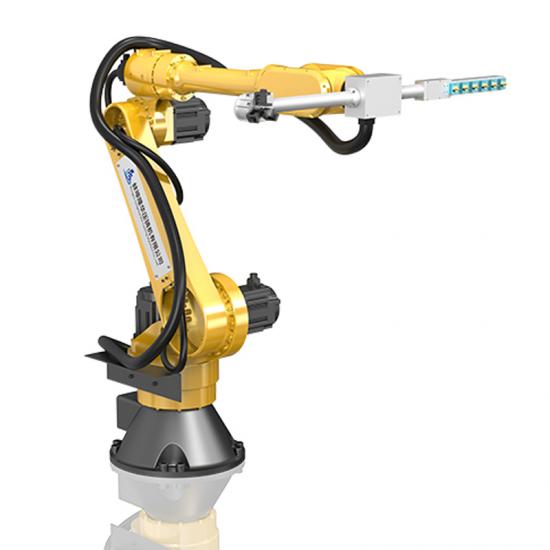
  • Installation and acceptance of die casting machine equipment
    March 17,2020.

    Installation and acceptance of die casting machine equipment

       In the last part, we talked about the equipment management of the die casting workshop. Today, Longhua Die Casting Machine will share with you another piece of dry goods knowledge: the installation and acceptance of the die casting machine equipment. (1) Installation of die-casting machine According to the drawing requirements of die-casting machine manufacturers, the traditional equipment installation method is to first build the equipment foundation and reserve embedded holes for the feet (see Figure 2). Then, put the anchor bolts into the grout, and then fine-adjust the equipment after the concrete has solidified. After the fine adjustment is completed, it will take some time for the equipment to be used normally after the surrounding oil and water tanks are completed. It basically takes nearly one month. In the actual installation process, considering that the above installation method takes too long, we can completely use the embedded steel structure to install the equipment. (2) Acceptance after installation The acceptance of the die-casting machine must first be based on the contract and the equipment test and acceptance record sheet, which is carried out one by one according to the acceptance items. When the manufacturer debugs the equipment, be sure to send someone to track the test and acceptance and record the test data.    Among them, the accuracy of the coaxiality of the pressure chamber is extremely critical, which directly affects the service life of the punch and the pressure chamber in the later stage. It is a mandatory inspection item for the newly purchased die casting machine. For PLC-controlled die-casting machines, the inspection of the scale-up board is easily overlooked. The function of the proportional amplification board is to control the output current in proportion to the magnitude of the input voltage, thereby changing the pressure and flow of the proportional valve to control the hydraulic system (if it is a single proportional valve, only the pressure is controlled). Specifically, if the total pressure of the digital adjustment system in the control cabinet is 0 to 14 MPa and the total flow rate is 0 to 100%, the pointers of the two ammeters should generally make     corresponding linear changes from 0 to 0.8 A. The linear error is allowed. About 2%. If the linearity error is too large, the linearity of the proportional plate will be insufficient, which will have a great impact on the adjustment of the die casting process parameters.    The supercharging and building pressure time cannot be measured specifically at the production site, and can only be estimated indirectly through the reaction of the pressure gauge pointer of the injection cylinder. The general approach is to adjust the boost delay, flow rate, and airbag pressure at a medium fast injection speed (such as about 3 m / s), watch the pointer of the injection cylinder pressure gauge change, and then close and clo...
    Read More
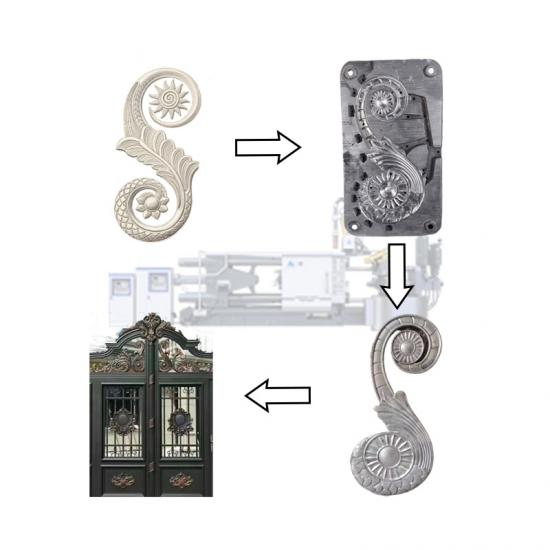
  • Management of Die Casting Machines
    2020-03-16

    Management of Die Casting Machines

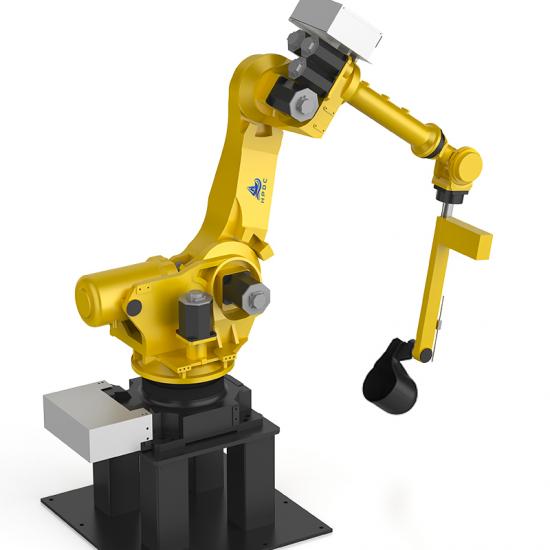
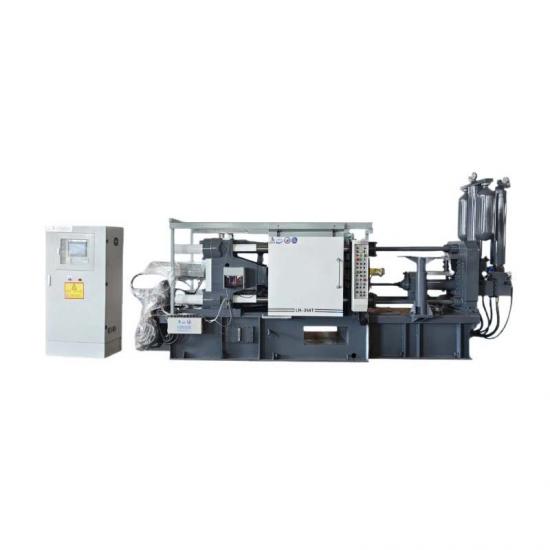
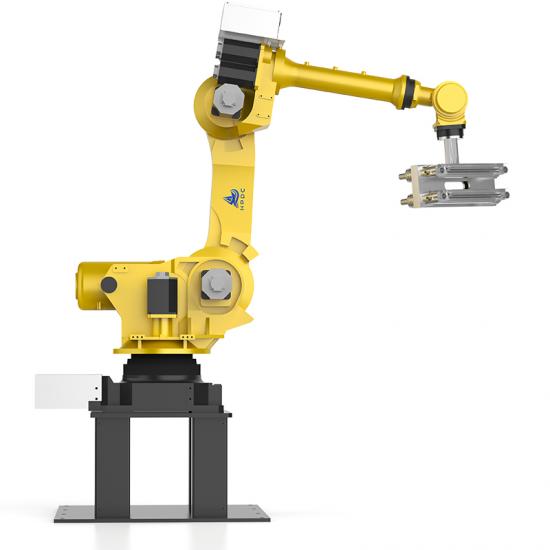
    Bengbu LongHua Die Casting Machine Co., Ltd. has released a professional workshop management guide, focusing on scientific die-casting machine procurement, performance selection and intelligent die-casting island construction to help global manufacturers stabilize casting quality and reduce production costs. In die-casting production, machine equipment is the core factor determining product yield and consistency. A high-performance die-casting machine serves as the fundamental guarantee for qualified precision castings. Longhua emphasizes standardized selection logic for both new factories and capacity-expanding enterprises. New producers shall select die-casting equipment based on product projection area and quality standards, while experienced manufacturers should consider long-term development instead of only matching current orders. A temporary large-tonnage die-casting machine arrangement is available for flexible mass production, with customized configurations for stable batch manufacturing to lower procurement costs. Reasonable parameter matching is critical for stable operation. Aluminum alloy production adapts to standard injection speed below 8.0m/s, while magnesium alloy casting requires injection speed above 6.0m/s. The hydraulic, cooling and electrical systems determine overalldie-casting machine stability. Longhua also solves the common hydraulic core-pulling retraction defect by upgrading the hydraulic circuit with a control check valve, effectively avoiding workpiece scrapping. During the use of the die-casting machine, some of the hydraulic core-pulling molds will be retracted. Sometimes the retracted size exceeds the allowable range of the product, causing the product to be scrapped. The problem of backing out of the core casting process of die-casting molds has long plagued mold manufacturers and Facing rising labor costs, the intelligent die-casting island has become a mainstream industry upgrade solution. It integrates a main die-casting machine with automatic peripheral equipment, including automatic ladling machines, servo sprayers, trimming machines and die-casting robots, realizing unmanned, stable and high-efficiency automated production. Factories can configure customized intelligent die-casting island solutions according to site conditions, budget and product added value. Longhua will continuously update die-casting equipment acceptance and maintenance guidelines to support global clients with full-lifecycle die-casting machine management.
    Read More
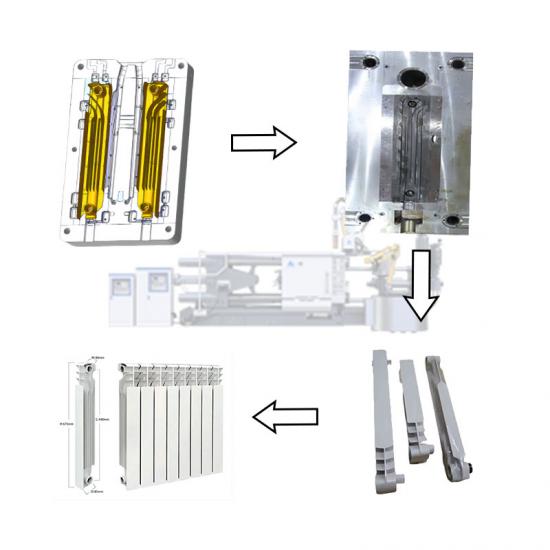
  • Understanding of Die Casting Process
    March 13,2020.

    Understanding of Die Casting Process

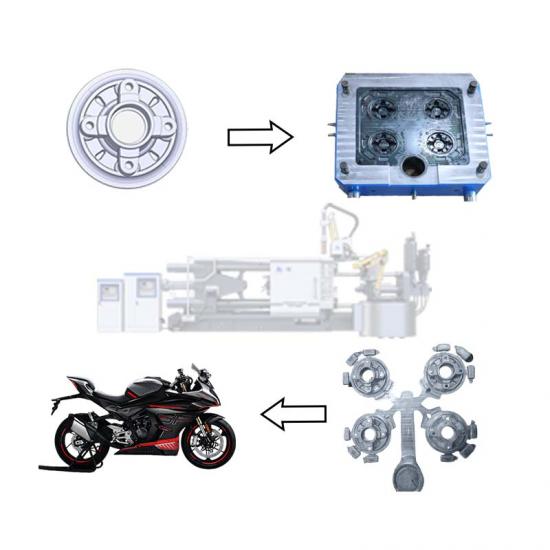
    In modern production technology, die casting is a very common production form. Common die castings are aluminum alloy die casting and zinc alloy die casting. Today, Longhua Technology will briefly introduce the principle of die casting: Die-casting: (Press-casting) is to quickly press a liquid or semi-liquid alloy into a mold cavity under high pressure, and solidify under pressure to obtain a casting; 1. Inject metal First close the mold cavity, and inject metal liquid into the mold inlet through the injection hole on the pressure chamber; 2. Die-casting The injection punch advances, and the metal liquid is pressed into the mold cavity; 3. Take out the casting. After the casting is solidified, the core pulling mechanism pulls out the cores on both sides of the cavity at the same time. Remarks: 1. The mold cavity is made of a special alloy tool steel (such as 3Cr2W8V2), that is, the mold steel; 2. The cavity should be maintained at 120-280 ° C during die casting (depending on the specific die casting material); 3. The specifications of the die casting machine are generally expressed by the size of the clamping force; Of course, there is still a lot of knowledge involved in the process of die casting. It is impossible to understand everything in a small article. This time I just let everyone know the process of die casting. I hope you can pay more attention to Longhua Die Casting Machine and bring you more information.
    Read More
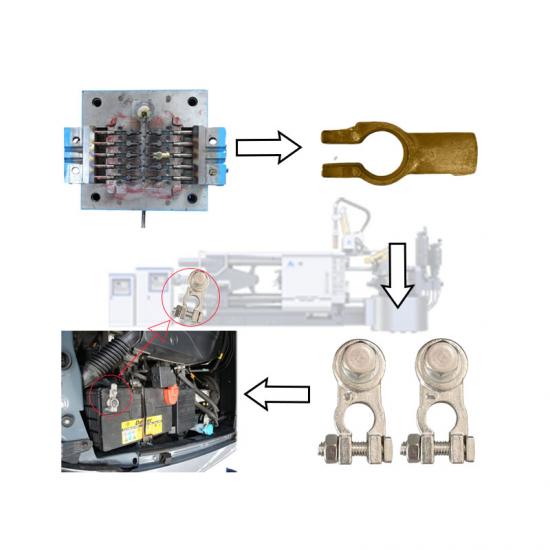
first page 31 32 33 34 35 36 37 last page

A total of 37 pages

leave a message leave a message
If you are interested in our products and want to know more details,please leave a message here,we will reply you as soon as we can.

Home

Products

News

Contact