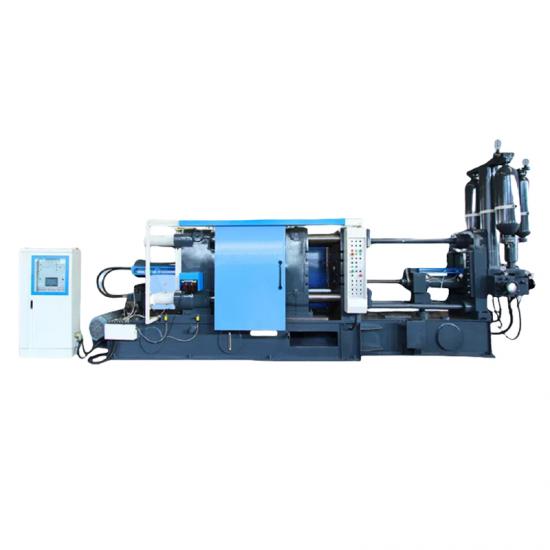





core selling point
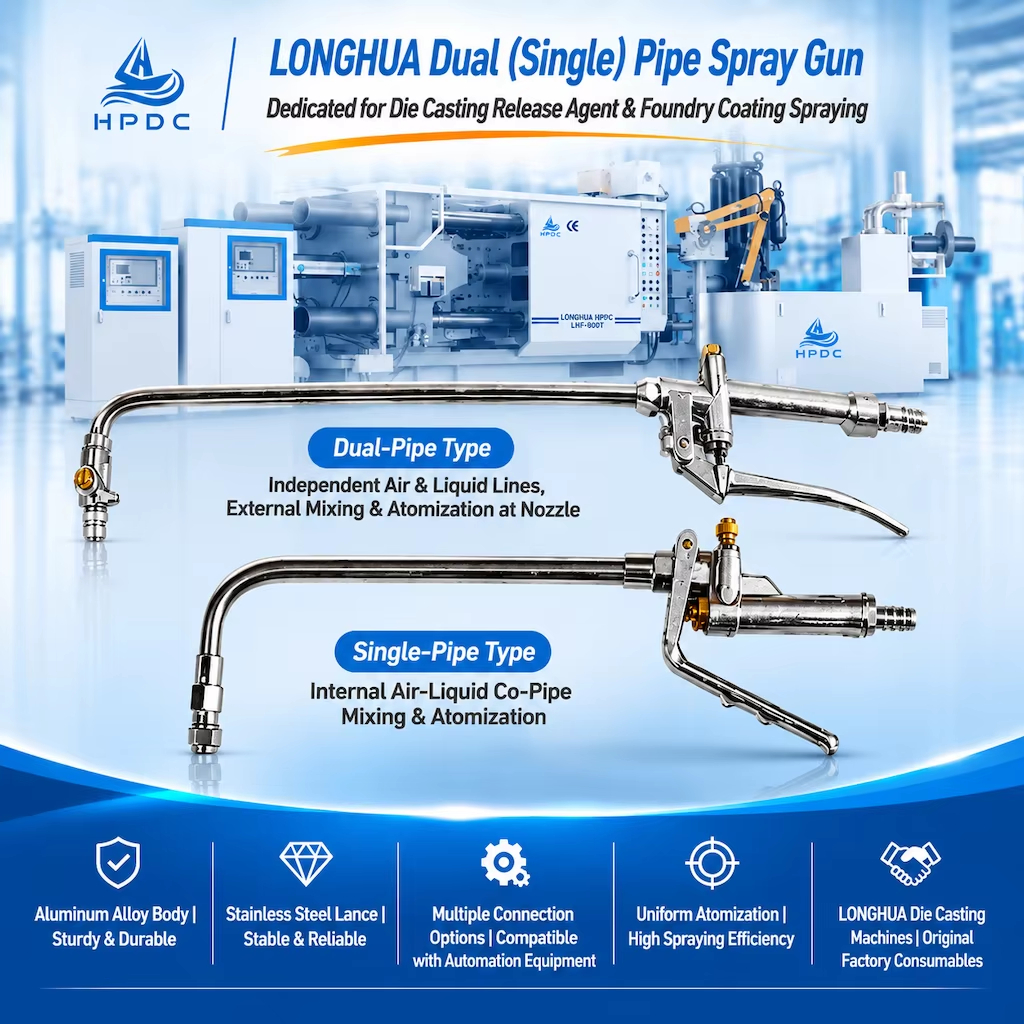
1. Dual independent gas and liquid pipelines, finer atomization and more material saving
The air pipeline and liquid pipeline of the double-tube type are completely separated. The air pressure and liquid volume can be adjusted independently. Mixing and atomization are performed at the muzzle. The atomization particle size is fine and uniform. The utilization rate of the release agent is high. The spraying volume of the same area is less than that of a single-tube gun. It saves materials for long-term mass production.
2. Simple structure, durable and resistant to blockage, low maintenance cost
The single-tube type has a simple overall structure, does not have a complicated diverter valve body, and is not easy to be blocked by material accumulation; the double-tube type has a short liquid channel, a smooth inner wall, and a large diameter. Both models can quickly disassemble and assemble the barrel and nozzle, requiring only cleaning and replacement of seals on a daily basis, resulting in short downtime for maintenance.
3. High temperature resistance, corrosion resistance, suitable for harsh die-casting environments
The gun barrel is made of stainless steel, and the surface of the gun body is treated with corrosion resistance. It will not rust or deform even if it is working near high-temperature molds, release agents, weak alkali environments and workshop dust for a long time; the sealing ring is oil-resistant and weak alkali-resistant, and is not prone to aging and leakage.
4. The spray width and flow rate are adjustable, and a single gun can cover large and small molds
By adjusting the nozzle and air flow, the atomization cone angle and spray width can be switched within a wide range, ranging from slender cores and insert blind spots to large shell mold surfaces. A single gun can cover it, reducing the number of gun changes.
5. Lightweight ergonomic grip, long-term operation is not tiring
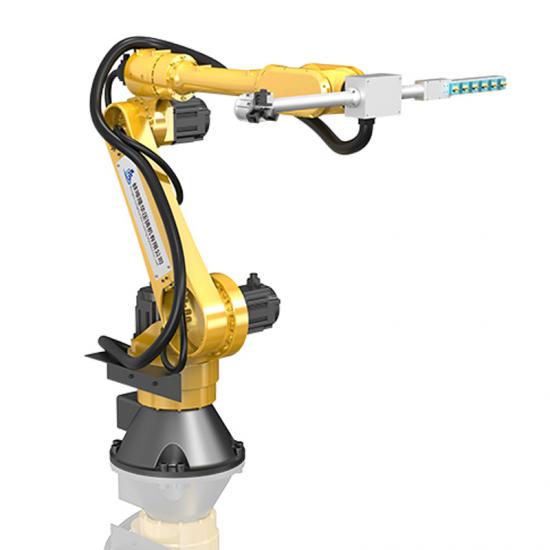
The gun body is light, the center of gravity is close to the grip, the trigger stroke is short, and the rebound is fast; it is not easy to fatigue when holding the gun for a long time when manually spraying, and it can also be directly clamped to the end of the automatic sprayer bracket or robot.
6. Complete matching with Longhua equipment and consumables
The interface specifications are matched with the spray system, pipeline and release agent of Longhua die-casting machine. The air pressure, flow rate and atomization parameters are adjusted at the factory and can be used immediately after replacement. It is also compatible with conventional air compressors and liquid supply pumps on the market.
How to use
- Connection: The gas line is connected to clean compressed air (it is recommended to install a filter pressure reducing valve and an oil-water separator), the liquid line is connected to the release agent liquid supply pipe or liquid supply pump, and the pipeline is tightened with a clamp to ensure no air or liquid leakage.
- Pressure adjustment: First adjust the air pressure to 0.3~0.4 MPa, then adjust the fluid supply pressure to a point where liquid can be discharged stably, not too high.
- Trial spray mist adjustment: Spray on the waste mold surface or test plate and observe the mist shape. If the mist is too thick, increase the air pressure or change the nozzle to a smaller diameter; if the mist is too loose, the spray width is too large or splashes, reduce the air pressure.
- Spraying posture: The spray gun is perpendicular to the mold surface, with a distance of about 200 to 300 mm. The gun speed is uniform, and the spray is covered layer by layer to avoid local material accumulation.
- Double-tube type adjustment: first adjust the air pressure to determine atomization, and then adjust the liquid volume to determine the discharge; single-tube type relies on the ratio of air pressure and liquid valve to produce mist.
- Cleaning after use: Before each shutdown or material change, spray air with clean water (or special cleaning fluid) for 10 to 20 seconds to rinse away the residual liquid in the barrel and nozzle to prevent drying and clogging.
Use and care
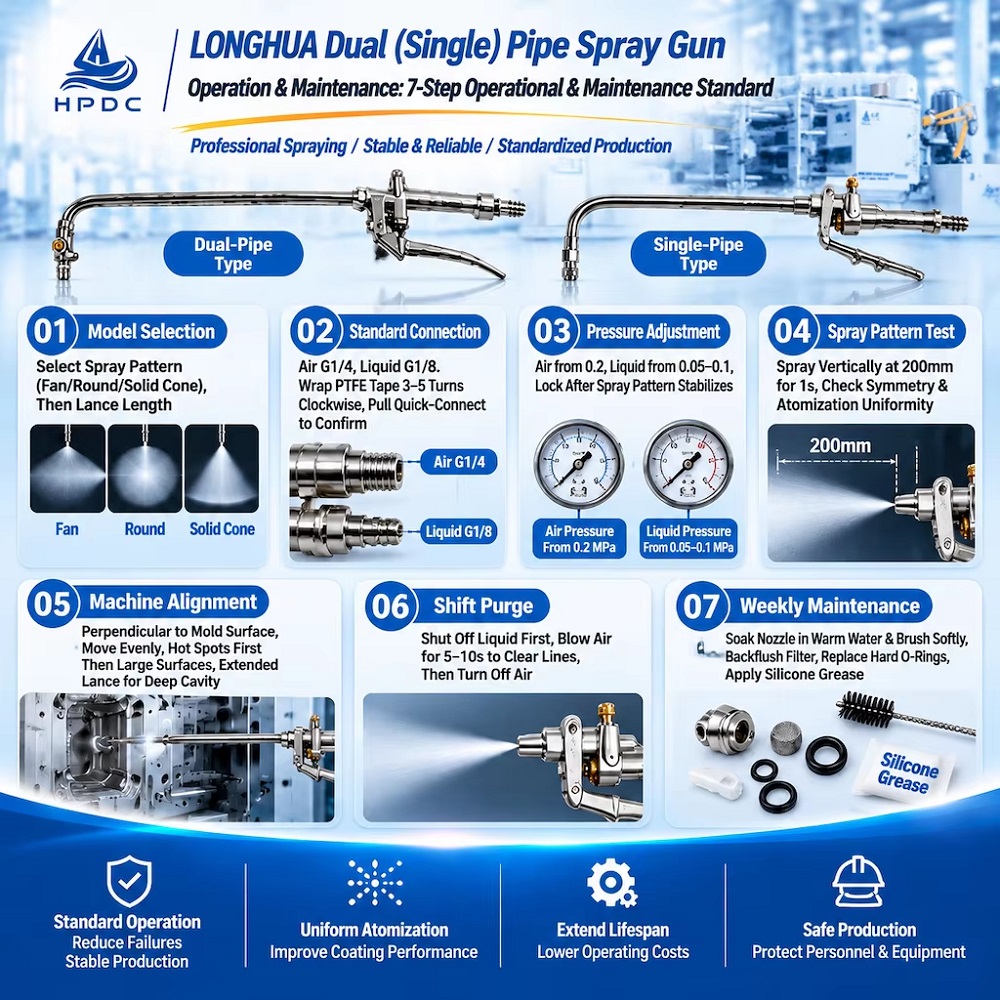
- Matching model selection: first determine the fog shape (fan-shaped/circular/solid cone), and then determine the gun length.
- Connection: air G1/4, liquid G1/8, 3-5 turns of raw material tape along the thread, pull back to confirm when plugging in quickly.
- Pressure adjustment: starting from 0.2 for gas and starting from 0.05-0.1 for liquid, gradually increase until the mist shape is stable, and adjust the locking.
- Test the mist shape: Spray vertically with a spray distance of 200 mm for 1 second to check the symmetry and whether there are water droplets in the center.
- Alignment on the machine: Vertical profile, even movement, heat the joint first and then the large surface; use an extension rod for deep cavities, do not lean into the mold.
- Purge every shift: first turn off the liquid and only turn on the air for 5-10 seconds, then turn off the air.
- Weekly maintenance: remove the nozzle and soak it in warm water with a soft brush, flush the filter, replace the O-ring when it becomes hard, and apply a thin layer of silicone grease before installation.
Single tube vs double tube
|
Project |
Single Pipe |
Double Pipe |
|
pipeline |
One stick, premixed with gas and liquid |
Two roots, gas and liquid separated |
|
Atomization quality |
The fog droplets are thick and the coverage is sufficient |
Fine, adjustable gas-liquid ratio, cleaner edges |
|
adjustment ability |
Limited, mainly depends on changing nozzles |
The fan angle and flow rate can be adjusted separately and can be locked |
|
Blockage risk |
Higher (residual liquid solidifies in the tube) |
Low (no liquid enters the gun, it will be cleared by blowing air) |
|
Clean |
Purge every shift and remove pipes regularly |
Stop and blow for 5–10 s during model change |
|
drip control |
Average |
Equipped with anti-drip valve, which can be disconnected when you release it |
|
Feel |
light |
Slightly heavier, the extension rod is more obvious |
|
Typical scenario |
Small parts, touch-up spraying, mold testing, and finishing |
Main spraying, automatic line, deep cavity, fine atomization |

Company introduction
Bengbu Longhua Die-casting Machine Co., Ltd. is located in Bengbu, Anhui, an old industrial base and a national comprehensive transportation hub. It is a high-tech enterprise focusing on the design, research and development, production, sales and global after-sales service of various die-casting machines and supporting equipment. The company traces its origins to 1950, and officially started the R&D and manufacturing of die-casting machines in 1982. As a pioneer in the domestic die-casting machine industry, Longhua has been deeply involved in the industry for decades, continuing to deepen technological innovation and promote product iteration, and has accumulated solid technical accumulation and rich industry experience.
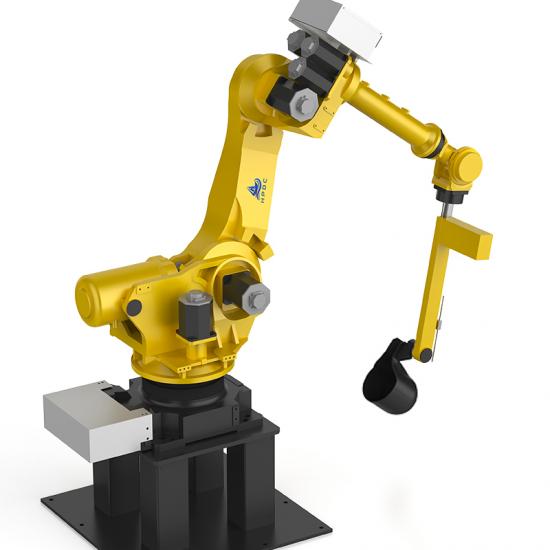
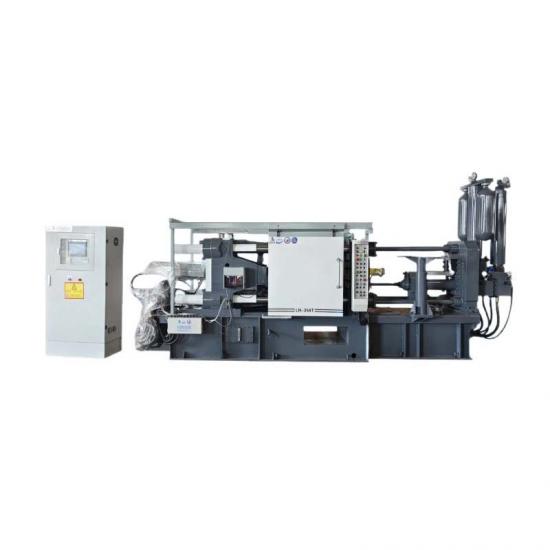
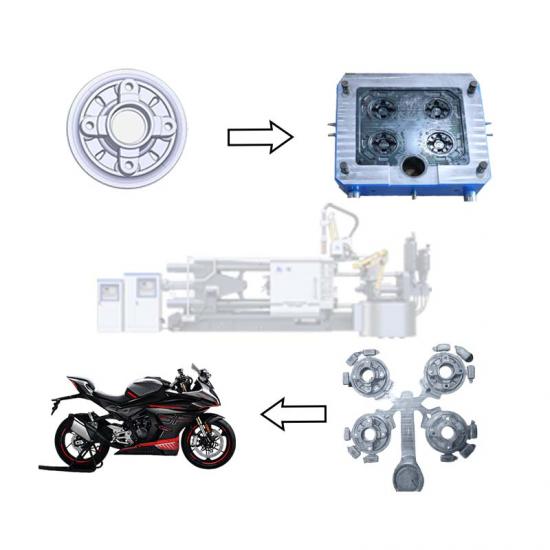
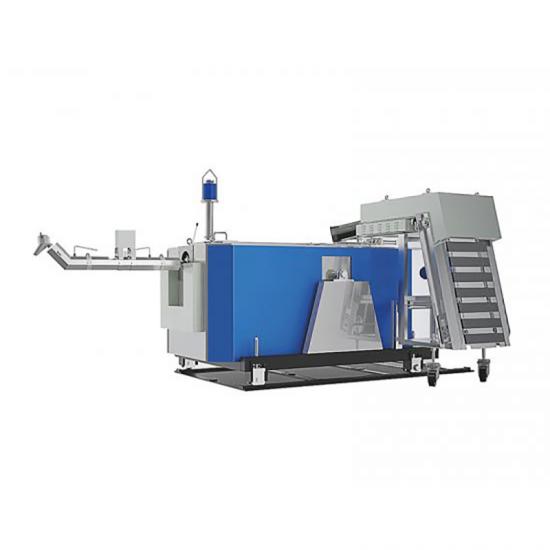
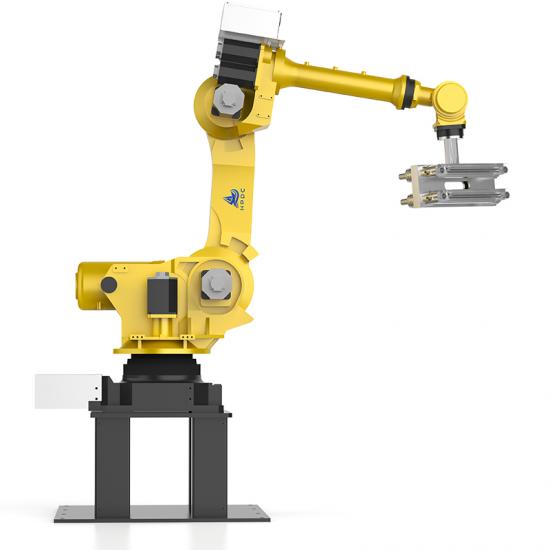
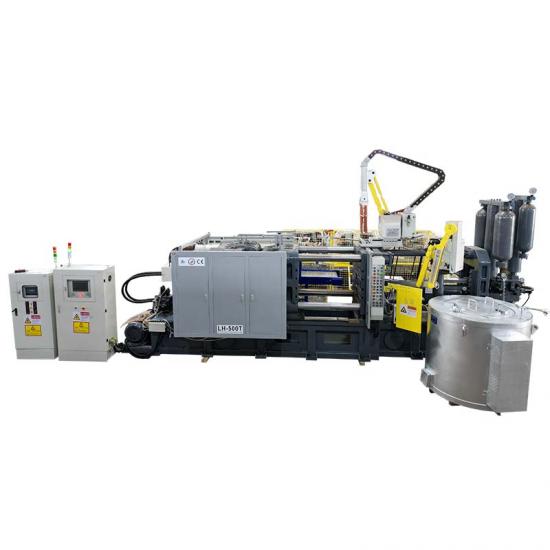
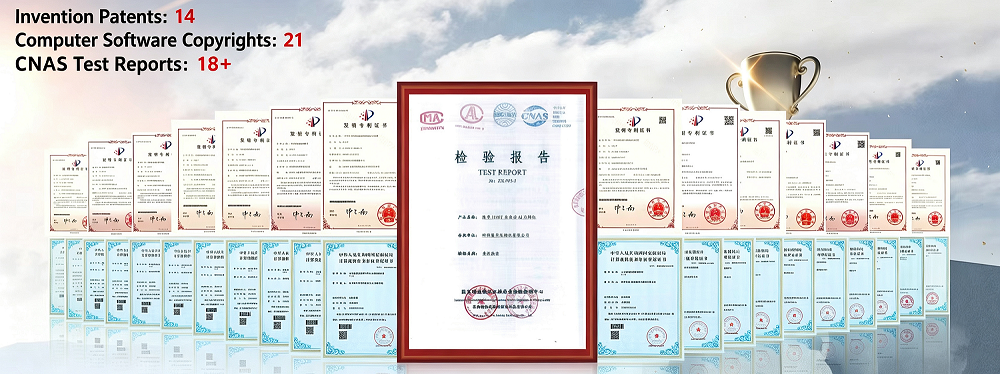
The company's product line has a complete layout. It mainly operates core machines such as cold chamber die-casting machines and hot-chamber die-casting machines. It is also equipped with die-casting manipulators, industrial robots and various die-casting auxiliary equipment. It has built a complete product matrix and can provide integrated die-casting production solutions to customers in different industries. The company has made great achievements in innovation, with 14+ invention patents and 21+ computer software copyrights. It is the leading developer of the group standard for "Artificial Intelligence Cold Chamber Die Casting Machine". At the same time, the products have CNAS test reports and CE certificates, and quality compliance is guaranteed.
At present, Longhua's products have been exported to more than 50 countries and regions around the world. With stable and reliable equipment performance and excellent production efficiency, they are widely used in key fields such as automobile manufacturing, aerospace, and electronic information, and have gained widespread trust and praise from customers at home and abroad.

FAQ
Q1: Can I spray other liquids?
Water-based release agents, emulsions, cleaning agents, and anti-rust fluids are acceptable; solvent-based ones containing particles and high viscosity are not acceptable because they will swell the seal and block the nozzle. Inform the composition and pH before changing media.
Q2: What is the air pressure? Is the air source enough?
0.2–0.6 MPa, spray release agent 0.2–0.4 starting adjustment; single gun gas consumption 100–400 L/min. When spraying multiple guns at the same time, the total flow rate must be calculated. If the air compressor and air storage tank are insufficient, the pressure will drop and the mist will become thicker.
Q3: Why is the mist shape distorted/half of it not spraying?
First check the nozzle (partial blockage or knock and deformation), backwash with warm water, do not poke it with a needle; then check the air path (the joint is leaking, the quick plug is not inserted all the way). Both are normal and still crooked. Change the nozzle to compare.
Q4: What should I do after spraying the drops?
It is mostly caused by valve core seal wear or spring fatigue. Replace the seal; it may also be due to lack of purging at the end of the shift. If the dripping liquid falls into the dead corner of the mold cavity, it will be the air hole. If it is found, the replacement part will be stopped.
Q5: How long does a gun last? What are the wearing parts?
The gun body is more than 2–3 years old; the nozzle is 3–6 months old, the seal is 3–6 months old, and the valve core spring is 6–12 months old. Always have a set of seals + two nozzles.
Q6: How to choose the nozzle angle?
The angle is calculated based on the width of the profile and the spray distance (when the spray distance is 200 mm, 60° is about 230 mm and 110° is about 570 mm, which is actually affected by air pressure); circular dots are used for re-spraying at the core root and deep cavity.
Q7: Does the extension rod affect atomization?
One thing is that the pressure loss along the way causes the terminal air pressure to drop slightly. Increase the inlet pressure by 0.05–0.1 MPa to compensate; do not rely on increasing the liquid volume to replenish mist.
Q8: Can it be connected to an automatic line/robot?
Yes, the timing is controlled by the die-casting machine or robot program; high-frequency valves are used for pulse micro-injection, and the single mold can be as low as 0.8 L.