Request a Quote
Language : English

English

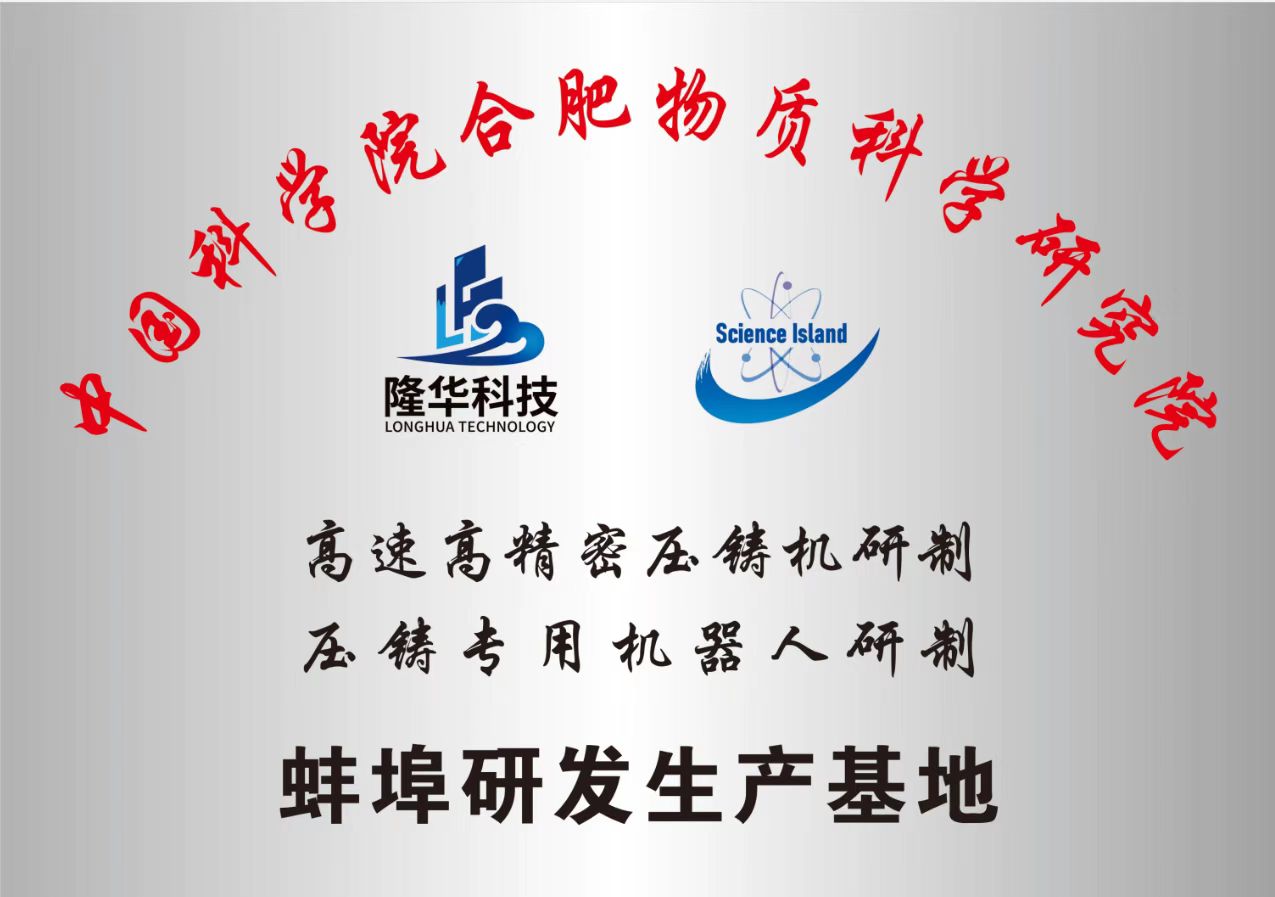
  • Anhui Province's first set of major technical equipment honorary certificate
    2023-02-09

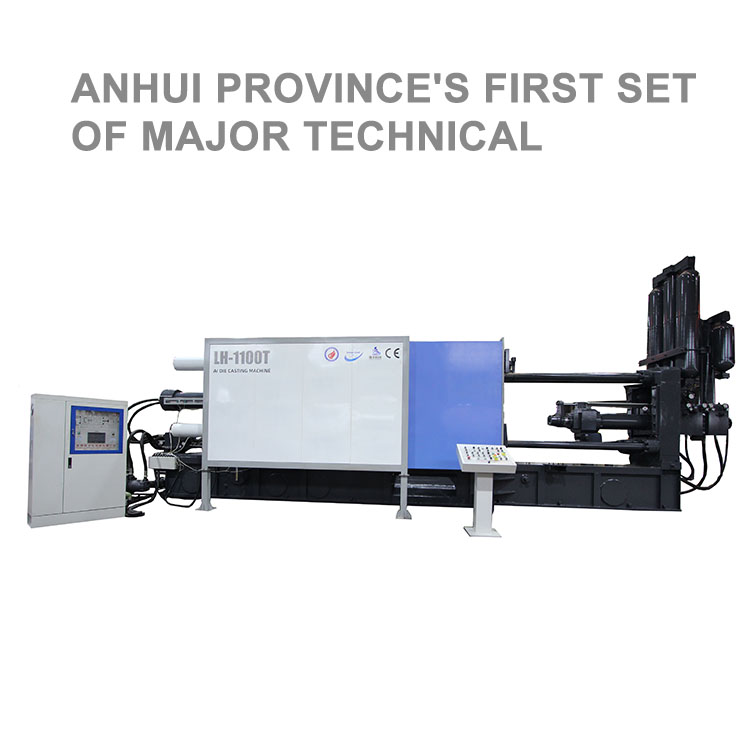
    Anhui Province's first set of major technical equipment honorary certificate

    "Longhua 1100T automatic AI die-casting machine" is jointly developed and produced by "Hefei Institute of Chinese Academy of Sciences", "Bengbu Institute" and "Bengbu Longhua". During the research and development and production process, it has successively won 10 national invention patents and 4 computer software certificates and other honorary certificates. Some technical performance indicators of "Longhua 1100TAI die-casting machine" have reached the international advanced level. The successful research and development of this product has completely solved the problem that domestic production of high-precision die-casting parts requires a large amount of foreign exchange to purchase imported die-casting machines! Greatly reduce the procurement and production costs of domestic non-ferrous metal processing plants, and save a lot of foreign exchange resources for the country! Domestic intelligent die-casting machine, help science and technology to power the country!
    Read More
  • Bengbu College awarded Bengbu Longhua Zhou Wenping
    2022-11-11

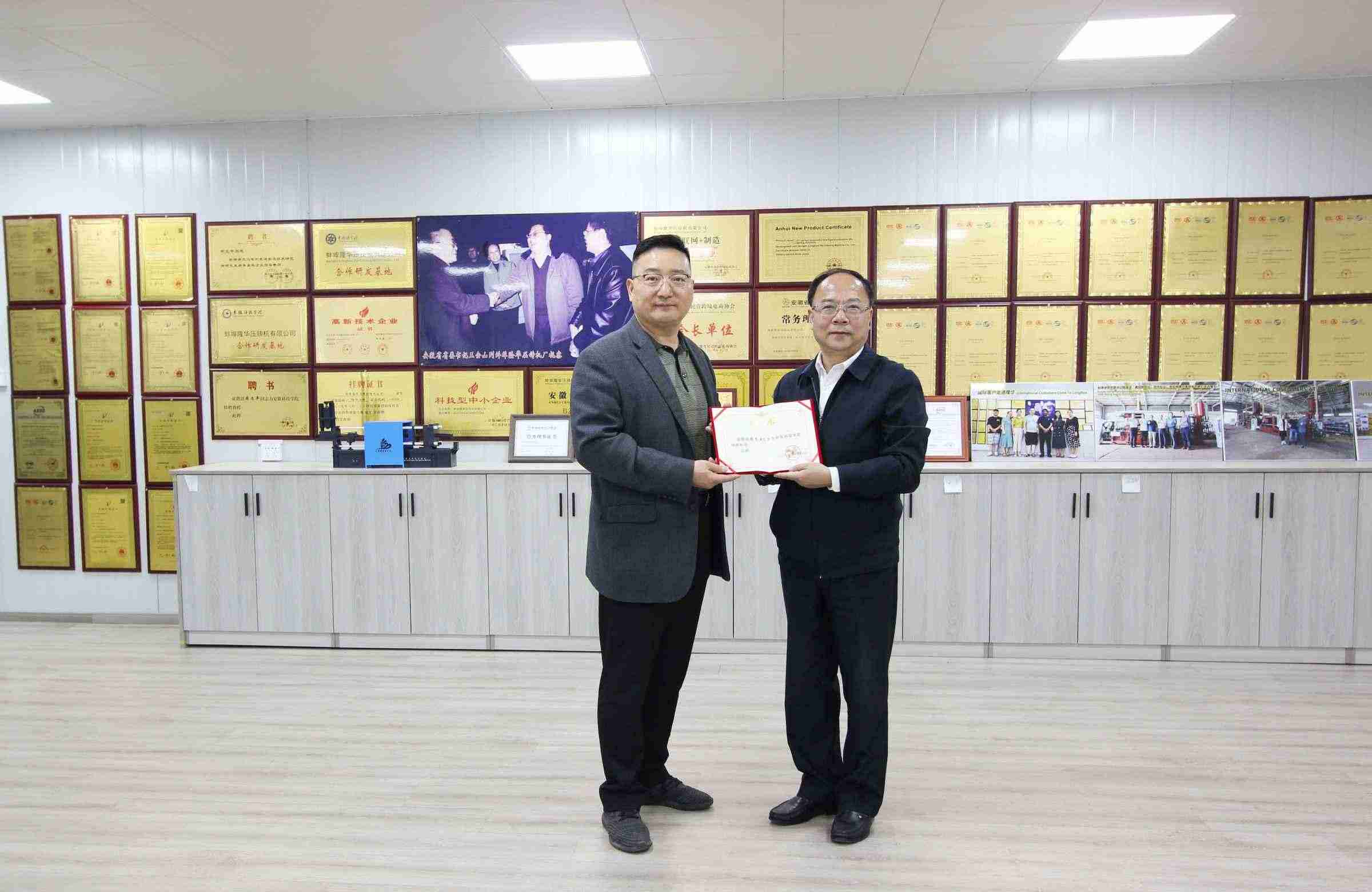
    Bengbu College awarded Bengbu Longhua Zhou Wenping "Distinguished Professor" Certificate of honor!

    Bengbu College awarded Bengbu Longhua Zhou Wenping "Distinguished Professor" Certificate of honor! On November 9, 2022, Chen Guolong, member of the Party Committee and Secretary of Bengbu University (Doctor of Science, Member of the Communist Party of China, postdoc, professor and master supervisor of Institute of Software of Chinese Academy of Sciences), led by Huang Yinghui, Dean of School of Computer Science of Bengbu University, Wu Jie, director of Scientific Research Department, and Dr. Li Xianwei, computer expert [Major of Information and Communication (Computer System and Network Engineering) of Waseda University, Japan; The delegation arrived at Bengbu Longhua for a field visit to the cooperation project between the two sides. Both sides first confirmed the cooperation relationship between the institute and the enterprise, and signed the cooperation agreement of "Bengbu College Student Internship Base" with Longhua. At the same time, Mr. Chen Guolong, Secretary of the Party Committee of Bengbu College, awarded the title of "Distinguished Professor" to Mr. Zhou Wenping of Bengbu Longhua Die Casting Machine Co., LTD. We hope that both parties will further implement the national policy of "Institute, enterprise, industry, university and research cooperation" based on the vision of mutual benefit and mutual sharing of resources.
    Read More
  • Bengbu Longhua and Bengbu College signed the R&D cooperation agreement of
    2022-11-11

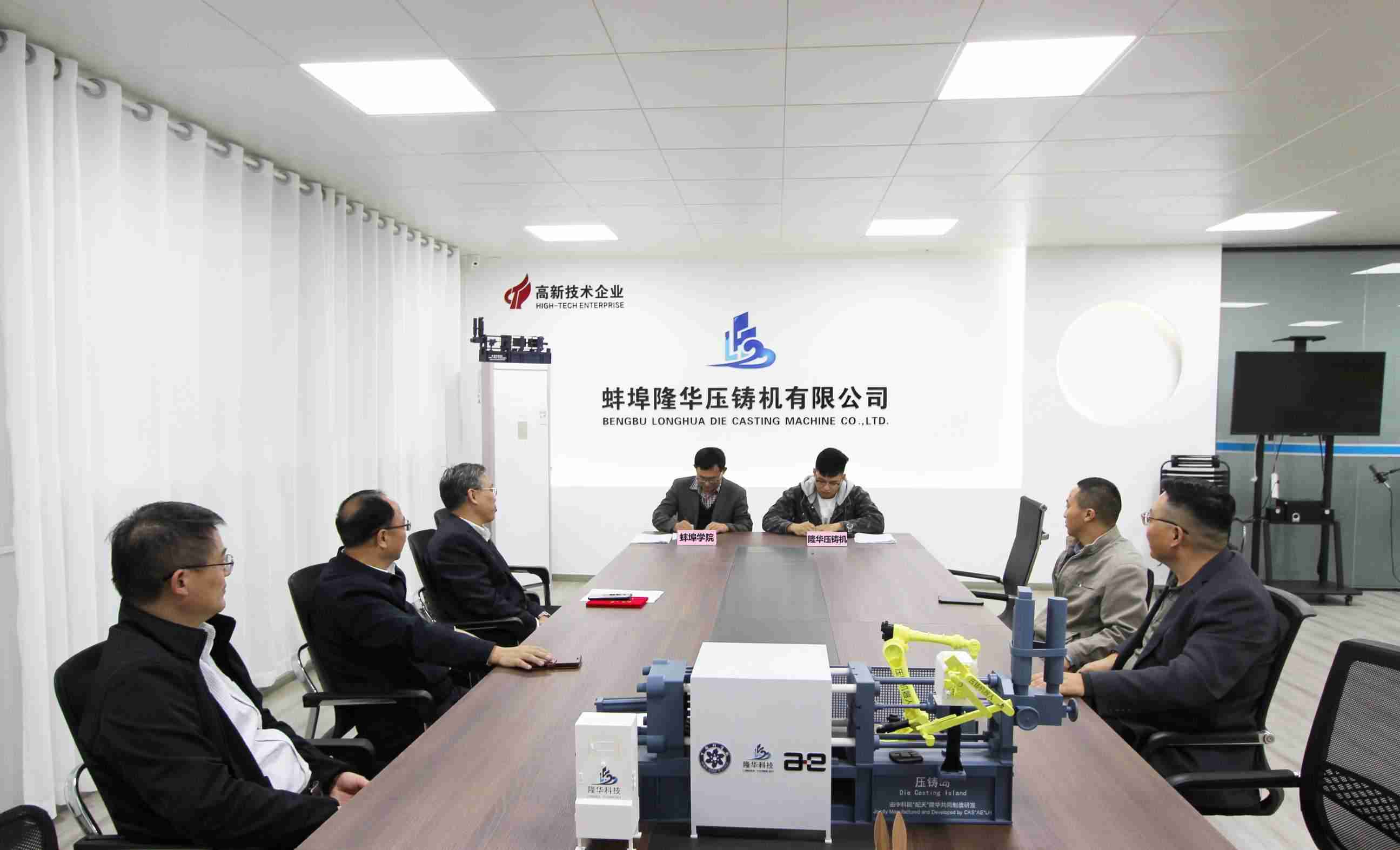
    Bengbu Longhua and Bengbu College signed the R&D cooperation agreement of "Ali Cloud Control System for Die Casting Robot"!

    Warm congratulations! Bengbu Longhua and Bengbu College signed the R&D cooperation agreement of "Ali Cloud Control System for Die Casting Robot"! On November 9, 2022, Chen Guolong, member of the Party Committee and Secretary of Bengbu University (Doctor of Science, Member of the Communist Party of China, postdoc, professor and master supervisor of Institute of Software of Chinese Academy of Sciences), led by Huang Yinghui, Dean of School of Computer Science of Bengbu University, Wu Jie, director of Scientific Research Department, and Dr. Li Xianwei, computer expert [Major of Information and Communication (Computer System and Network Engineering) of Waseda University, Japan; The delegation arrived at Bengbu Longhua and held an on-site signing ceremony with Bengbu Longhua on the R&D cooperation of "Ali Cloud Control System of die casting robot". The die casting machines and automation products of Longhua have been exported to 27 foreign countries and regions so far. Due to the impact of the epidemic, it is inconvenient for technical personnel to go abroad. In order to better and faster solve the problems encountered by customers in the process of product operation, improve the accuracy of after-sales service and the controllability of product operation, Longhua has carried out R&D cooperation with Bengbu College on the project of "Ali Cloud Control System for Die-casting Robot". The successful R&D of this project enables our technicians to directly monitor the operation of products from the cloud, greatly improving the efficiency of our products and services, solving problems for customers, and making our products win the world's reputation.
    Read More
  • What is die-cast robotic machinery?
    2022-10-24

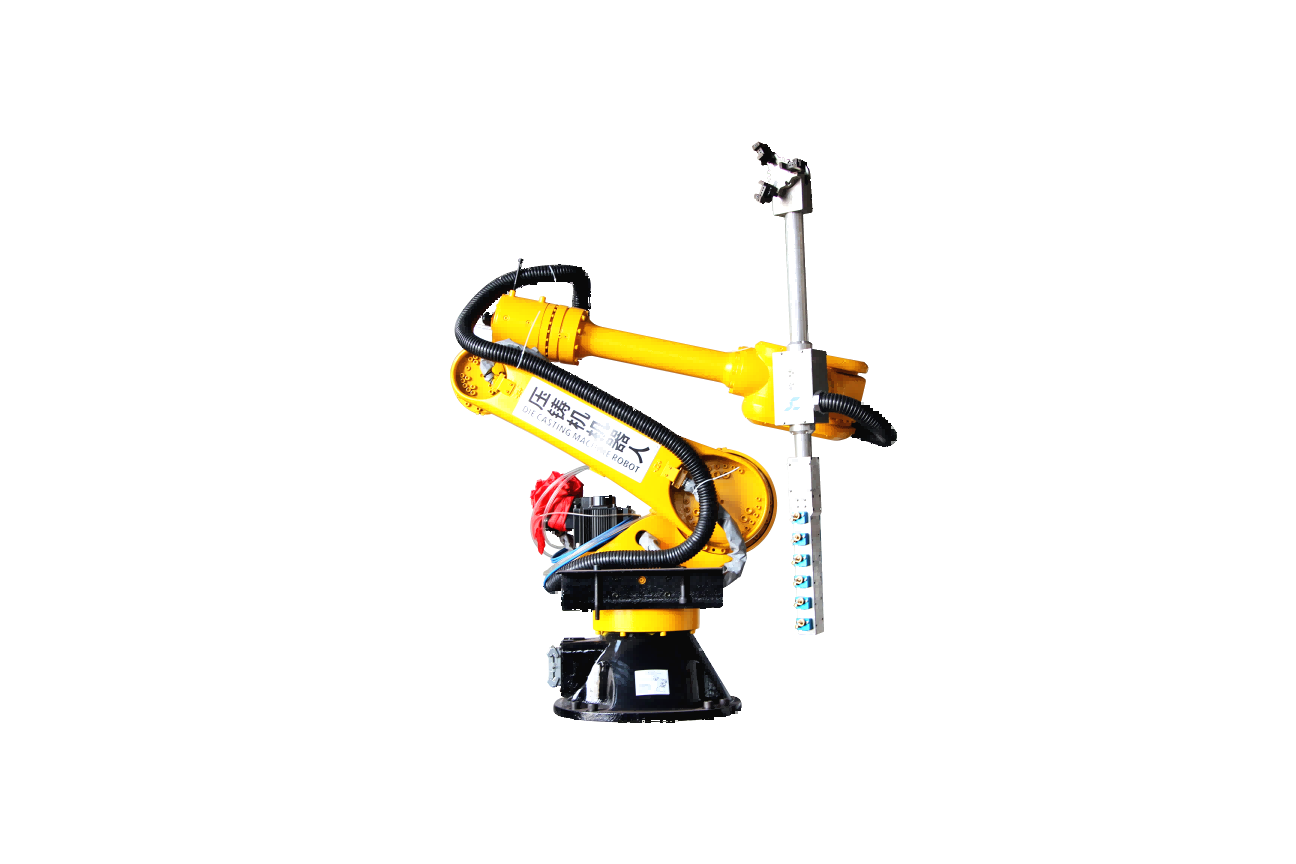
    What is die-cast robotic machinery?

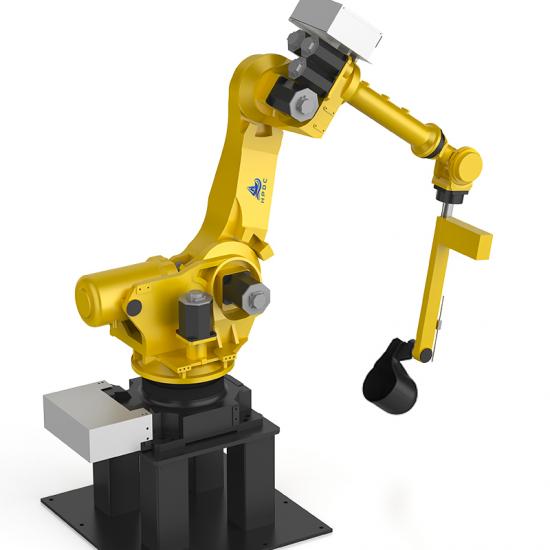
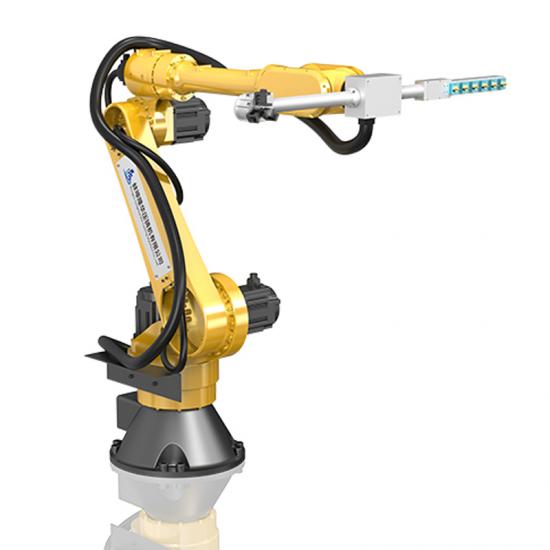
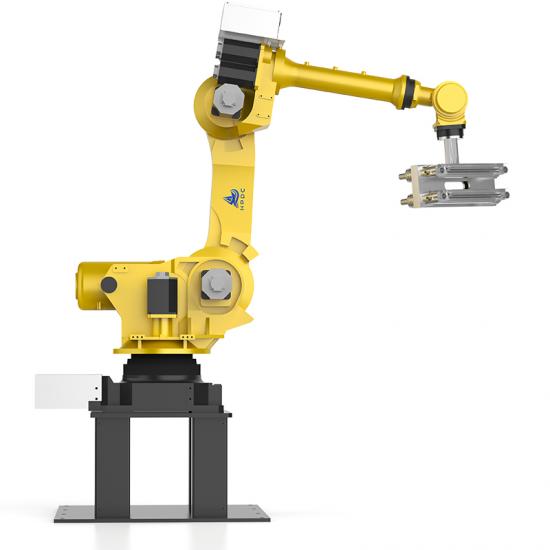
    Traditional die casting production always faces capacity waste caused by trial production and R&D debugging, which occupies machine capacity and restricts formal mass production. To solve this industry pain point, Longhua die casting robot realizes full-process intelligent automation for die casting workshops, greatly improving production efficiency and product stability. Equipped with three sets of Longhua 50KG die casting robots, a traditional die casting cell has been successfully upgraded into a fully automatic manufacturing cell dedicated to vehicle transmission parts production. The intelligent die casting robot supports multiple core functions, including automatic part removal, mold parting agent spraying and thixocasting billet loading. Mounted on the top of die casting machines, the robot sprays molds immediately after mold release signals. After the machine opens the mold, it accurately clamps the casting sprue and takes out workpieces in soft-axis mode to avoid casting damage. It then transports castings to the sensor inspection station to detect product completeness and mark defective parts with red dots automatically. After intelligent inspection, the robot completes mold spraying and air drying to prepare for the next production cycle. Versatile and practical, Longhua foundry robot adapts to diverse working scenarios, covering casting extraction, core assembly, mold cooling and lubrication, dross skimming and molten metal ladling. It effectively optimizes die casting procedures, saves labor costs and maximizes equipment capacity for modern intelligent foundry factories.
    Read More
  • The difference and connection between hot chamber die casting and cold chamber die casting
    2022-10-08

    The difference and connection between hot chamber die casting and cold chamber die casting

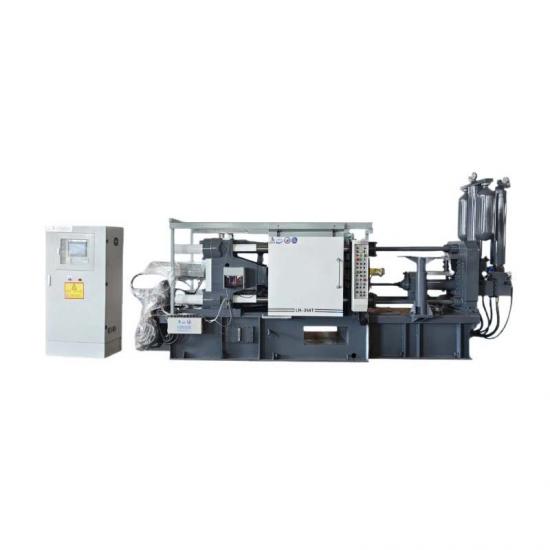
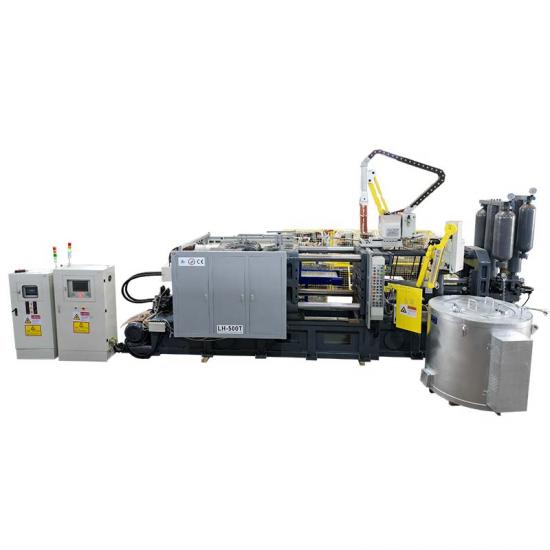
    Hot chamber and cold chamber die casting are two core forms of high-pressure die casting processes, widely applied in modern metal manufacturing. Although both molding principles are similar, their applicable materials, operating parameters and production efficiency differ greatly, guiding the selection of professional die casting machine and supporting die casting equipment for industrial production. The most distinct difference lies in applicable melting temperature and metal types. Hot chamber die casting machinery works below 450°C, suitable for low-melting alloys such as zinc, lead and partial magnesium alloys. It adopts an integrated built-in furnace structure, enabling direct metal feeding with faster cycling speed, lower production cost and longer die service life. In contrast, cold chamber die casting adapts to high-temperature alloys above 600°C, including aluminum, copper and brass. Equipped with an external melting furnace, it relies on automatic or manual ladling for feeding, featuring higher molding precision and stronger adaptability for large castings. As a professional die casting machine manufacturer, Bengbu Longhua provides full-series hot and cold chamber die casting solutions. Its cold chamber equipment covers 140T–2000T, supporting all-scale aluminum alloy casting projects, with upgraded technology cooperating with the Hefei Institute of CAS. The 60T–250T hot chamber die casting equipment is ideal for high-volume zinc alloy production. The two processes have their own merits without absolute superiority. Hot chamber die casting excels in efficient and economical mass production, while cold chamber die casting dominates high-precision, high-strength and high-melting-point alloy molding. Longhua’s diversified die casting equipment portfolio precisely meets personalized production needs of global foundry enterprises.
    Read More
  • About high pressure die casting process
    2022-09-13

    About high pressure die casting process

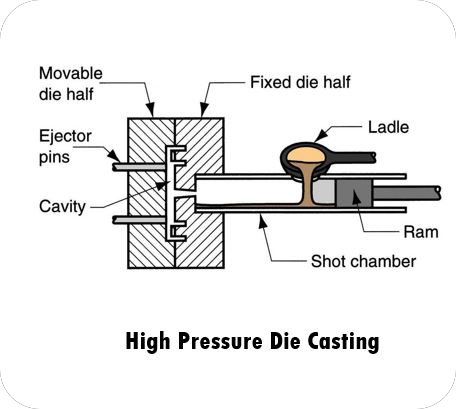
    High pressure die casting can produce castings quickly and economically. These castings can be composed of various holes, threads and notches, which are characterized by high dimensional accuracy and good surface finish. They make the metal economical and require little or no surface treatment. The principle of pressure die-casting is to press molten metal into a mold or die under considerable pressure. Machines used for this purpose operate on one or both systems: Hot chamber die casting machine (for metals with low melting point) Cold chamber die casting machine (for metal with high melting point) In a hot chamber die-casting machine, the metal is kept liquid in a crucible inside the machine, and the pressure chamber that feeds the metal into the mold is located in the metal groove. Such machines can be operated pneumatically, or more usually by the action of a stamping piece to develop pressure. The cast metal of the cold chamber machine is kept liquid in the holding furnace, transferred from the holding furnace to the pressure chamber by a spoon or a special automatic device, and pressed into the mold by a stamping piece. Some simple machines are operated by hand, but in order to increase productivity, fully automatic machines are more commonly used. In pressure die casting, the complex multi-part design of precision manufactured dies, and therefore very expensive, is exposed to harsh working conditions with continuous changes in high pressure and temperature. For the production of zinc and zinc-alloy castings, molds can be made of unalloyed steel, but for magnesium, aluminum, copper, and alloys of these metals, molds are generally made of hot-worked steel, which is much more durable. Another development of high-pressure die casting is vacuum die casting. It produces castings with a better finish than ordinary high pressure castings. There are two systems in which the mold is either enclosed in a hood that draws out the air, or an insulated furnace is installed beneath the casting machine so that metal is drawn into the mold and compacting inside it while the air is drawn out. A process for making cast iron castings has been developed based on this principle.
    Read More
  • Die casting and die casting machine categories
    2022-09-02

    Die casting and die casting machine categories

    First, what is die casting? Die casting is a process of using pressure to inject molten metal into a mold and then obtaining a cast product with a precise shape or geometry as the internal shape of the mold. In this article, we will talk about the equipment of this process, what is a die casting machine, the common type of die casting machine, and their mechanism and choice. Two, what is the die casting machine? Die casting machine is used for metal casting process, through the die casting machine to inject molten metal into the mold cavity, when the metal cools and solidifies, it will form the shape of a die casting, which is a manufacturing method to obtain metal castings such as aluminum or zinc die casting. Three, die casting machine type: Die casting machines can be divided into different categories according to different classification methods such as use and size. Generally speaking, die casting machines can be divided into two kinds: hot chamber and cold chamber. 1.1. Hot chamber die casting machine The hot chamber machine has a pressure chamber connected to the mold cavity to which molten metal can flow continuously. When the cylinder of the chamber returns to its unpressured position, the molten metal is fed into the casting mold. A crucible for melting metal is attached to the machine, and a piston mechanism for hydraulic injection of metal into the mold is installed in the crucible. Some hot chamber die-casting machines use compressed air to press metal directly into the mold, without the need for a piston mechanism. The injection mechanism is immersed in molten metal, so it is necessary to avoid chemical corrosion or corrosion of the immersion injection system. Hot chamber die casting machine is mainly used for casting zinc, tin and other low melting point alloys. 1.2. Advantages of hot chamber die casting machine -- High productivity - Improve surface finish - Capable of producing complex castings - Tight dimensional tolerances - Suitable for zinc die casting 2.1 Cold chamber die casting machine In the cold chamber machine, metal melted from a separate holding furnace is scooped into the cold chamber sleeve after the mold is closed. The metal is then pressed into the mold, which is opened to solidify, and the cast will be injected. The metal is melted outside the machine and added to the compression chamber. It can be divided into vertical cold chamber die casting machine and horizontal cold chamber die casting machine according to the motion direction of compression piston. The molten metal is removed from the furnace of the vertical cold chamber die casting machine and injected into the compression chamber. The metal is injected into the mold by a compression piston, and the remaining metal is pushed out by another piston. The horizontal cold chamber die casting machine works in the same way as the vertical die casting machine, except that the direction of piston movement is horizontal. Most modern die casting machines are horizon...
    Read More
  • Longhua hot Chamber die casting machine operation guide
    2022-09-02

    Longhua hot Chamber die casting machine operation guide

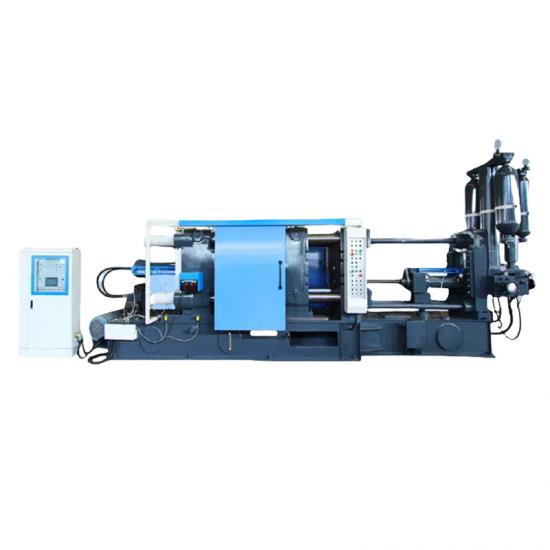
    BENGBU, China – September 01, 2026 — Bengbu LongHua Die‑casting Machine Co., Ltd., a trusted Chinese manufacturer with more than 40‑year experience designing and producing industrial die‑casting equipment, has published a professional technical guide explaining hot‑chamber die‑casting, its operating principles, suitable alloys and core differences from cold‑chamber die‑casting, to help global foundry buyers select the right casting solution for mass‑production projects. Die‑casting falls into two primary categories: hot‑chamber die‑casting machine and cold‑chamber die‑casting machine. The final selection depends on product specifications and manufacturing goals. As a high‑pressure permanent‑mold forming technology invented in the early 20th century, die‑casting can deliver complex‑shaped components with fine‑detailed surfaces, high dimensional accuracy and ultra‑thin wall sections as thin as 0.5 mm. Finished parts range from hardware components, motor housings and carburetors to automotive safety accessories, electronic shells and lightweight medical‑equipment parts. In hot‑chamber die‑casting machine, molten metal is heated inside the gooseneck‑style die‑casting machine. A built‑in furnace keeps metal melted, then a hydraulic piston injects liquid metal into the mould at high speed. Thanks to its shorter cycle time, hot‑chamber equipment is ideal for high‑output, large‑batch‑production projects. Unlike hot‑chamber units, cold‑chamber die‑casting machines do not melt metal on board. Molten alloy must be poured manually or by automatic ladle systems into the shot chamber before high‑pressure injection. Long‑term equipment‑operation data shows hot‑chamber die‑casting machines are best suited for low‑melting‑point metals, such as zinc and magnesium alloys. High‑melting‑point materials including aluminum will erode and damage plungers and internal components, leading to frequent costly spare‑part replacement. Zinc‑alloy castings feature balanced hardness, strength, excellent wear‑resistance, outstanding electrical‑thermal conductivity, thin‑wall forming capability, good corrosion resistance and full recyclability. They serve as a cost‑effective substitute for stamped, machined parts in automotive and consumer‑electronics sectors. Magnesium, the lightest commercial die‑casting alloy, delivers remarkable strength‑to‑weight performance, reliable EMI‑RFI shielding effects, stable high‑temperature performance and premium surface finish, making it perfect for electrical connectors, equipment housings and medical signal‑sensitive devices. With over four decades of R&D and manufacturing experience, Longhua supplies both hot‑chamber and cold‑chamber die‑casting machines and offers fully‑customized equipment solutions tailored to customers’ zinc‑alloy and magnesium‑alloy production demands. Global manufacturers requiring technical consultation or custom‑die‑casting‑machine quotation are welcome to reach out via WhatsApp: 19105526587 or Email: Info@longhuam...
    Read More

first page 21 22 23 24 25 26 27 28 29 30 last page

A total of 37 pages

leave a message leave a message
If you are interested in our products and want to know more details,please leave a message here,we will reply you as soon as we can.
Home

Products

News

Contact